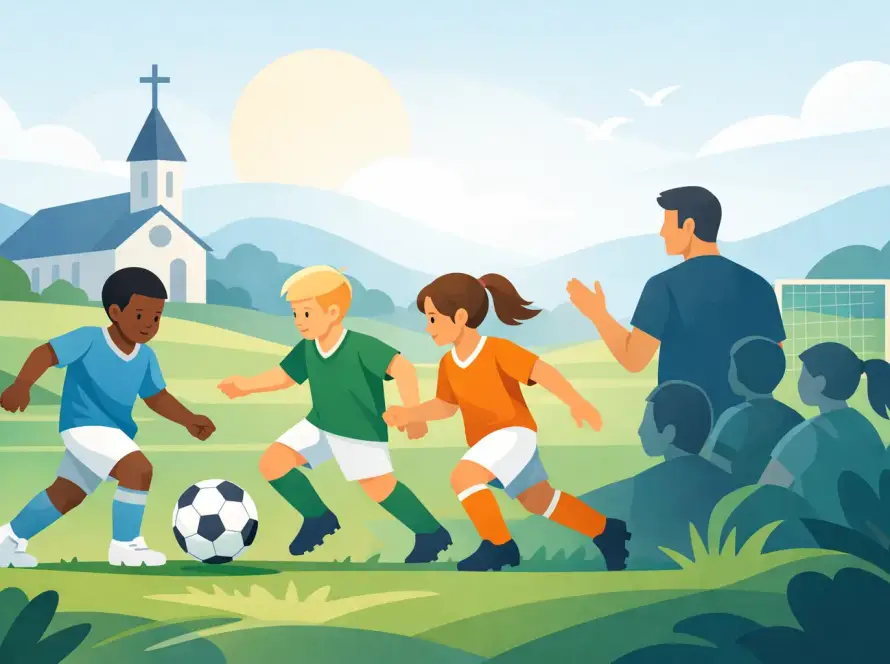
A loose first touch can turn a promising attack into a turnover in one second. A clean touch can give a young player time to look up, protect the ball, connect a pass, or attack space. To improve soccer first touch, players need more than repeated ball work. They need a clear purpose for every reception: control the ball, prepare the next action, and stay composed when the game speeds up.
For players in the Inland Empire, the difference often shows up on busy fields and in competitive matches. The player who receives the ball with confidence is not always the fastest or biggest. Usually, that player has learned to scan early, choose the right surface, and make the first touch serve the next play.
Why First Touch Changes the Game
First touch is the action a player takes when the ball arrives. It includes controlling a pass on the ground, bringing down a bouncing ball, receiving under pressure, and directing the ball into space. It is not simply about stopping the ball at your feet.
The best first touch gives a player options. A defender may receive with the back foot and move forward immediately. A winger may take the ball down the line to create separation. A midfielder may cushion a firm pass away from pressure before playing the next pass. Each choice begins before the ball reaches the player.
Young athletes sometimes focus on flashy moves before they can consistently receive a simple pass. Skill moves have a place, but reliable control builds confidence faster. When players trust their first touch, they ask for the ball more often. That willingness matters for development, leadership, and team play.
Improve Soccer First Touch With a Simple Process
Every clean reception follows a repeatable sequence: scan, move into position, choose the surface, soften the ball, and take it toward the next action. Players do not need to overthink these steps during a match. They should practice them enough that the sequence becomes natural.
Scan before the pass arrives
Many poor touches begin with late information. If a player looks down at the ball without checking the field first, they may control it directly into a defender or miss an open teammate.
Encourage players to look over both shoulders before the pass comes. They should notice where the pressure is, where space is available, and what their likely next decision will be. One quick scan can turn a rushed first touch into a calm, purposeful one.
Parents watching from the sideline can reinforce this without coaching every play. A simple reminder such as, “Check your shoulder early,” is more useful than shouting where to pass after the ball has already arrived.
Meet the ball instead of waiting for it
Waiting flat-footed makes the ball harder to control. Players should move toward the pass when appropriate, create an angle, and stay balanced with knees slightly bent. This is especially important when receiving firm passes or balls that bounce unevenly on a natural grass or hard field.
Meeting the ball also protects possession. When a player steps toward a pass, a defender has less time to close the gap. The receiving player can use their body to shield the ball, then play out of pressure.
Use the right part of the foot
There is no single correct surface for every ball. The inside of the foot offers a broad, dependable surface for short passes. The outside helps players redirect the ball quickly. The sole can stop or pull the ball away from pressure, while the laces and thigh may be needed for balls arriving in the air.
For newer players, the inside of the foot is the best place to begin because it creates consistency. As players grow, they should practice receiving with both feet and multiple surfaces. A player who can only control the ball one way becomes easier to predict and defend.
Cushion, do not stab
A hard foot against a hard pass often sends the ball away. Good control requires a soft receiving touch. As the ball arrives, players should relax the ankle slightly and allow the foot to give with the pass. Think of catching an egg rather than kicking a wall.
This does not mean the touch should always stop the ball. A cushion can guide the ball into a new space. The goal is controlled redirection, not a perfect stop.
Practice Drills That Build Game-Ready Control
A player does not need a complicated setup to make real progress. Consistent, focused repetitions with a ball, a wall, cones, and a willing partner can produce better results than occasional long sessions with no purpose.
Wall passing with a directional touch
Find a safe wall and place two cones a few yards apart. Pass the ball to the wall, receive the return with one foot, and guide it through either cone gate with the first touch. Then pass again with the other foot.
The key is to avoid receiving straight backward. Before each pass, choose a direction. This teaches the habit of taking the ball away from pressure and into the next action. Start slowly with accuracy, then increase the pace as control improves.
Two-touch square
Set up a small square with four cones. A player receives a pass from a partner, takes the first touch toward a different side of the square, and passes back with the second touch. After several repetitions, add a rule that the player must call out the side they are moving toward before the ball arrives.
This drill connects scanning, communication, and body position. It also teaches a valuable lesson: the first touch should move the player somewhere useful, not merely keep the ball close.
Juggling with purpose
Juggling develops comfort with the ball, but players should give it structure. Challenge them to alternate feet, use both thighs, or take two juggles and then bring the ball under control with one touch. For younger athletes, even five focused touches at a time is progress.
Juggling alone will not replicate match pressure, so it should support passing and receiving work rather than replace it. It builds feel. Game-like drills build decisions.
Receiving under pressure
Use a small grid with one passer, one receiver, and one defender. The receiver starts with their back or side to the defender, scans before the pass, then has three seconds to control and pass to a target. Switch roles often.
At first, the defender should apply light pressure. As players improve, make the space smaller or allow the defender to win the ball. This creates the emotional challenge players feel in games: staying calm when someone is closing quickly.
The Details Coaches Look For
A strong first touch is visible in a player’s body shape. Before receiving, players should be on their toes, balanced, and slightly side-on when possible. An open body shape lets them see more of the field and play forward faster.
The supporting foot matters, too. If it is too close to the ball, the player may feel cramped. If it is planted with balance and the hips are open, the receiving foot has room to guide the ball. These details may feel small, but they separate a touch that creates space from one that invites pressure.
Players should also learn when a simple touch is the right choice. Not every ball needs to be turned, flicked, or pushed forward. Near their own goal, safety may matter most. In the attacking half, a positive first touch can create an advantage. Good decision-making depends on field position, pressure, and the player’s next option.
Build Both Feet, Not Just the Comfortable One
A player who can receive confidently on either foot becomes more useful in every position. Defenders can escape pressure on both sides. Midfielders can receive on the half-turn. Forwards can take chances without needing an extra adjustment.
Make the weaker foot part of every session, not a separate punishment. If a player completes 20 wall passes with the dominant foot, they should complete 20 with the other foot. The weaker side will feel awkward at first. That is not failure. It is the work of growth.
This approach also builds resilience. Young athletes learn that improvement is earned through patience, repetition, and the willingness to practice what is difficult. Those habits carry beyond the field into school, relationships, and future goals.
How Parents Can Support Progress
Parents play an important role by creating a healthy environment around development. Celebrate brave decisions, not only perfect results. If a player attempts to receive under pressure and loses the ball, ask what they saw and what they might try next time. That conversation builds awareness without creating fear of mistakes.
At Sentinels FC, development means helping players compete with purpose while growing in confidence, discipline, teamwork, and integrity. A young athlete does not need to become perfect overnight. They need consistent coaching, meaningful repetition, and adults who see both the player and the person.
Set aside 10 to 15 minutes a few times each week for focused ball work. Keep the challenge clear: scan before receiving, use both feet, and guide the ball toward space. Over time, the ball will stop feeling like something to chase and start feeling like something the player can truly command.
The next great first touch will not come from hoping the ball settles perfectly. It will come from a player who prepares early, stays composed, and chooses to keep working when the skill feels hard.