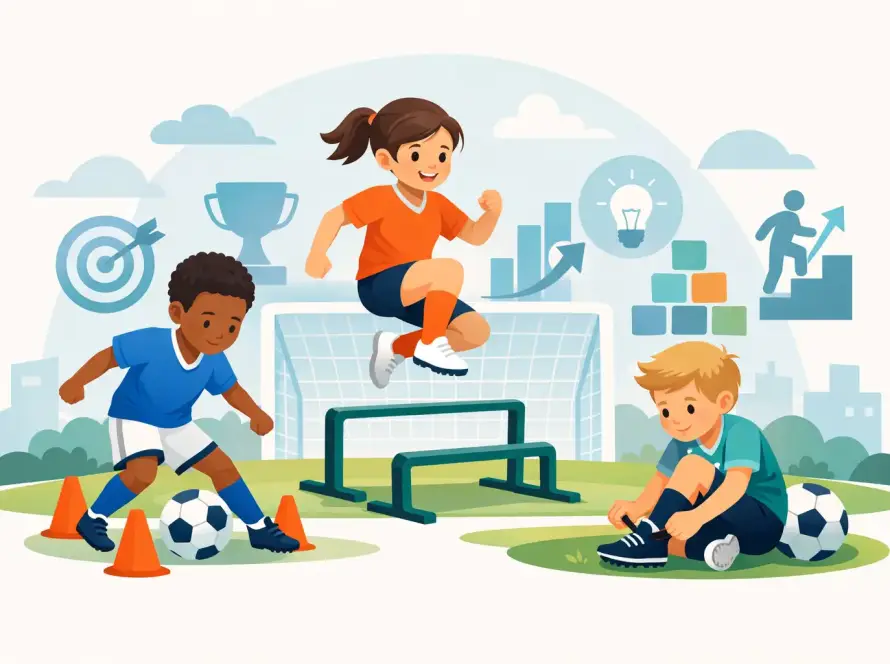
A captain’s armband does not create a leader. The player who picks up cones without being asked, encourages a teammate after a missed chance, and owns a mistake during a close match is already leading. Youth soccer leadership activities give young athletes meaningful chances to practice those habits before the pressure of a game asks them to show who they are.
For families, leadership development is about more than producing the loudest player on the field. It helps children grow in confidence, communication, discipline, and service. For coaches, it creates teams that listen, respond to adversity, and compete with greater purpose. The best activities are simple, consistent, and connected to everyday team life.
Why Leadership Belongs in Player Development
Soccer gives players constant leadership moments. A defender must organize teammates. A midfielder must communicate quickly. A goalkeeper must stay composed and give direction after a breakdown. Even a player who is naturally quiet can lead through effort, preparation, and respect.
That is why leadership should not be treated as a reward reserved for older players or the most skilled athletes. It is a skill that develops through repetition, coaching, and reflection. When young players learn to lead early, they become more dependable teammates and more confident young people away from the field.
Leadership also strengthens team culture. Players are more likely to stay positive when encouragement comes from peers, not only adults. They are more likely to take responsibility when teammates model accountability. A coach still sets the standard, but players begin to carry it together.
Youth Soccer Leadership Activities for Practice
The strongest youth soccer leadership activities fit naturally into training. They should not feel like a long classroom lesson added onto soccer. Instead, they should give players a job, a voice, and a clear opportunity to serve the group.
Rotate practice leaders
Assign two or three practice leaders each week. Their responsibilities can include helping set up equipment, greeting teammates, leading a dynamic warmup, and gathering balls after activities. Give them one communication responsibility as well, such as reminding the group of the day’s standard: compete with effort, communicate clearly, or respond quickly after losing possession.
Rotation matters. The same confident players will often volunteer first, but every athlete needs a chance to contribute. A younger or quieter player may need a smaller first assignment, such as leading one stretch or explaining a simple drill. Success in that role can build the confidence needed for the next one.
Use player-led huddles
Before a small-sided game, ask a different player to lead a 30-second huddle. Provide a prompt so the activity stays purposeful: What will help us win the ball back? How will we respond if we concede? What does good communication sound like today?
At first, players may offer only a few words. That is normal. Coaches can model a clear huddle, then gradually step back. The goal is not a polished speech. It is teaching athletes to speak with clarity, listen to others, and connect the team around a shared goal.
Create a teammate recognition moment
End practice with one minute of player recognition. Invite athletes to name a teammate who showed effort, improvement, encouragement, or integrity. Keep the focus on specific actions rather than general praise. “Jordan kept working after losing the ball twice” teaches more than “Jordan was great today.”
This activity helps players see leadership in many forms. The top scorer may receive recognition, but so might the player who helped a new teammate understand a drill. Over time, the group learns that service and consistency deserve respect.
Give players problem-solving roles
During a scrimmage, pause after a recurring issue such as players bunching around the ball or failing to track runners. Rather than immediately give the answer, ask a small group to discuss a solution for 45 seconds. Then choose one player to share the group’s plan.
This approach develops game awareness and ownership. It also teaches an important leadership lesson: good leaders do not have to know everything alone. They ask questions, listen, and help the group move forward.
Build Accountability Without Embarrassment
Youth leadership is not about making children police one another. It is about helping them uphold standards with maturity. Coaches should be careful not to turn leadership jobs into public pressure or give players authority they are not ready to handle.
For example, asking a player to call out every teammate who arrives late can create tension. A better approach is asking practice leaders to welcome teammates, ensure their group is ready, and remind everyone that preparation honors the team. The standard remains clear, but the tone stays constructive.
When correction is needed, teach players to use language that is direct and respectful. “Stay connected with me on defense” is more useful than “You are never in the right place.” “Next play, we press together” keeps the focus on a response instead of blame.
Accountability should begin with adults. Coaches who arrive prepared, communicate expectations, and admit their own mistakes show players what integrity looks like. Parents reinforce the same lesson when they value effort, respect officials, and avoid criticizing children from the sideline.
Match-Day Leadership That Matters
Games bring out a different kind of leadership. Players must make decisions quickly, manage emotions, and support one another when the result is uncertain. Assigning match-day responsibilities can help athletes approach competition with greater intention.
A captain can lead the pregame huddle, but other roles should rotate as well. One player might welcome the opponent and officials with respect. Another might lead the postgame line. A third might check that the team area is clean before leaving. These responsibilities teach that representing a team means more than playing well.
After a match, invite players to reflect on one leadership moment they saw. Keep it brief, especially after a difficult loss. A player may mention someone who kept communicating when the team was behind, helped an injured teammate, or accepted a coaching correction without frustration. Those moments shape a culture that can handle both victory and disappointment.
Include Every Kind of Leader
Not every leader is vocal, outgoing, or naturally comfortable in front of a group. Some athletes lead through calmness. Others lead through relentless work rate, thoughtful questions, or a willingness to include the player standing alone at practice.
Coaches should avoid defining leadership too narrowly. If only the loudest players are recognized, quieter athletes may believe they have nothing valuable to offer. Instead, name the different ways leadership appears: communication, preparation, courage, service, composure, and perseverance.
Age also matters. Younger players need short, concrete responsibilities and immediate encouragement. Teen players can take on more ownership, including helping organize a warmup, mentoring younger athletes, or discussing team standards before a tournament. The activity should stretch a player without setting them up to fail.
At Sentinels FC, complete player development means helping athletes compete, grow, and serve with character. Soccer can be a powerful place to build that foundation because every practice offers another chance to choose responsibility over excuses and encouragement over criticism.
How Parents Can Reinforce Leadership at Home
Parents do not need to turn the car ride home into a postgame meeting. Often, a few better questions make the biggest difference. Instead of asking only about goals, minutes played, or the final score, ask, “How did you help your team today?” or “Who showed leadership when things got hard?”
Celebrate the habits that coaches are trying to build. If your child packed their own bag, arrived ready, encouraged a teammate, or accepted feedback with a good attitude, point it out. These are small actions, but they become part of a young athlete’s identity.
It also helps to let players solve manageable problems. If they forgot a water bottle, they can learn to prepare earlier next time. If they are disappointed about a role on the team, listen first, then encourage them to speak respectfully with their coach when appropriate. Leadership grows when children learn that responsibility comes with choices.
A young player may not remember every drill from a season. They will remember whether their team taught them to speak up with respect, serve others, and keep going when the game became difficult. Give them those opportunities often, and leadership will become more than a role. It will become part of how they live.