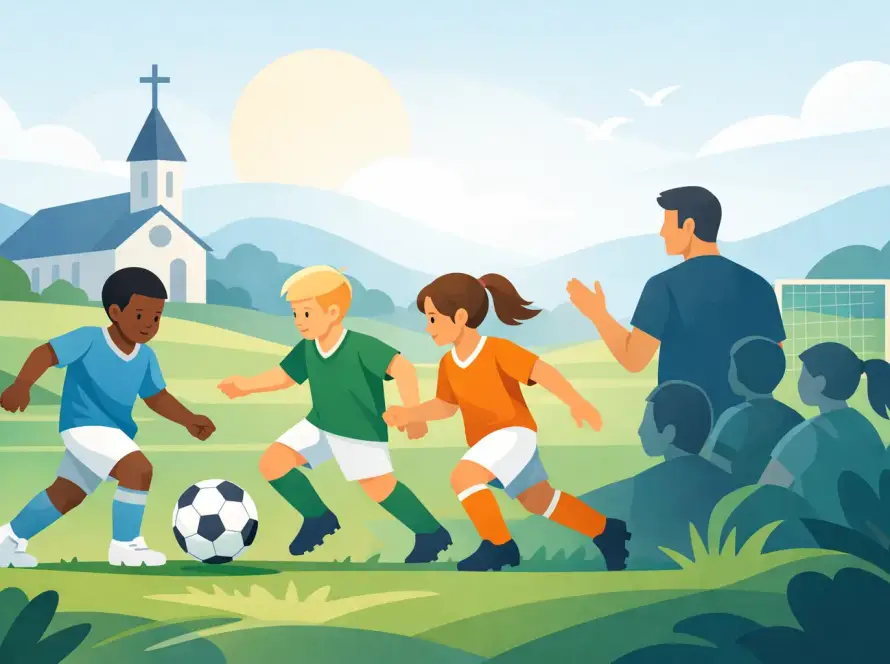
A young player does not need to be the fastest on the field to make meaningful progress. The player who learns to receive the ball with confidence, listens to coaching, recovers after a mistake, and encourages a teammate is building a foundation that matters. Recreational player progression is not about rushing children into higher levels before they are ready. It is about giving them the instruction, match experience, support, and purpose to keep growing.
For Inland Empire families, the right recreational soccer environment should feel organized and encouraging at the same time. Children need room to enjoy the game, but they also need clear expectations, consistent coaching, and teammates who are learning how to compete with respect. When those pieces come together, recreational soccer becomes more than a weekly activity. It becomes a place where young athletes develop habits they can carry into school, family life, and future competition.
What Recreational Player Progression Really Means
Progression is not measured by a single scoreline, a tournament medal, or whether a child is selected for a competitive roster at the end of a season. Those moments can be meaningful, but they do not tell the whole story. Real development shows up when a player makes better decisions under pressure, uses both feet more willingly, understands their position, and returns to practice ready to learn again.
For newer players, progress may begin with comfort on the ball. They learn how to dribble without staring at their feet, pass with purpose, and recognize that defending is a team responsibility. For players with more experience, the next step may be quicker play, stronger communication, greater fitness, or the ability to read an opponent before the ball arrives.
Every child develops at a different pace. Age, confidence, physical maturity, prior experience, and even a player’s personality can affect what growth looks like. A quiet player may be improving greatly before they are ready to become a vocal leader. A naturally athletic player may need more time learning patience and technical discipline. Good coaching sees the person behind the jersey and gives each player a constructive next step.
Build Skills Before Chasing Results
Winning is part of soccer, and young athletes should learn how to compete. Still, early development suffers when a team relies only on speed, size, or one talented scorer. Those approaches may produce a short-term result, but they can leave players unprepared when the game becomes faster and more demanding.
A strong recreational program teaches the skills that allow a player to solve problems. Ball mastery, passing and receiving, finishing, defending, movement off the ball, and basic game awareness all deserve attention. Players also need repeated chances to use those skills in realistic situations, not just isolated drills.
This is why practice habits matter. A player who gets meaningful touches, receives specific feedback, and is challenged to try again will usually progress faster than one who spends most of practice waiting in line. Small-sided games are especially valuable because they create more decisions, more touches, and more moments where players must communicate and react.
At home, parents can support this process without turning the driveway into another high-pressure training session. Ten or fifteen minutes of juggling, passing against a wall, or dribbling through simple markers can help. The goal is consistency and enjoyment. If a young athlete associates extra work with encouragement rather than fear of failure, they are far more likely to keep developing.
Confidence Comes From Preparation
Confidence is often misunderstood as being loud or never making mistakes. In soccer, real confidence is quieter and more durable. It is the willingness to ask for the ball after a bad pass. It is the decision to step in and defend after being beaten once. It is the belief that effort and learning can change what a player is capable of doing.
Coaches build this confidence by being honest and encouraging. Players need to hear what they did well, what needs attention, and how they can improve. General praise feels good, but specific direction creates growth. Telling a player they worked hard is valuable. Showing them how opening their body before receiving the ball will help them see the field is even more valuable.
Parents have an important role here, too. After a game, children do not always need a full performance review in the car. Often, a simple question such as What did you enjoy today? or What do you want to practice this week? keeps the conversation constructive. Young athletes should know they are supported whether their team wins, loses, or has a difficult day.
Use Match Play to Teach the Game
Practice develops tools. Games teach players when and why to use them. Recreational matches are an important classroom because they expose athletes to pressure, emotion, teamwork, and the unpredictability that makes soccer so demanding.
The best match experience includes appropriate challenge. If games are consistently too easy, players do not have to adapt. If every game is overwhelming, they can become discouraged. A healthy schedule gives athletes opportunities to succeed while also meeting opponents who force them to think faster, defend harder, and stay composed.
Playing time and position experience also require wisdom. Young players benefit from learning different roles, especially in recreational soccer. A child who plays defense begins to understand what forwards need to do to create space. A player who spends time in goal may gain new respect for communication and positioning. As athletes become older and their goals become clearer, specialized roles can make more sense. The balance depends on the player’s age, readiness, and desire to compete.
Match play should also teach response. A missed chance is not a reason to shut down. A referee’s call is not an excuse to lose focus. A strong opponent is not a reason to stop trying. These are moments when character becomes visible. Players who learn resilience in recreation are better prepared for the demands of competitive soccer and for challenges beyond the field.
Character Is Part of the Development Plan
Soccer gives children regular opportunities to practice values in action. Being on time shows respect. Helping collect equipment shows service. Accepting coaching shows humility. Choosing to encourage a teammate after a mistake shows leadership.
These lessons should not be treated as extras. Technical training and character development work together. A disciplined player is more likely to listen, prepare, and improve. A teammate with integrity earns trust. A player who understands accountability can handle both praise and correction with maturity.
Sentinels FC believes athletes can compete, grow, and achieve greatness while remaining grounded in purpose. The club’s faith-based foundation welcomes families from all religious backgrounds and cultures, creating a community where young people are known, challenged, and encouraged to serve others. With more than 25 years of coaching experience behind its approach, the focus remains on developing the whole player, not simply filling a roster.
Know When a Player Is Ready for More
A move from recreational soccer into a more competitive training environment can be exciting, but it should be based on readiness rather than pressure. Some players want more practices, faster competition, and greater responsibility. Others need another season to grow physically, technically, or emotionally. Neither path is a failure.
Readiness often appears in everyday habits. Does the player attend consistently? Do they respond to coaching? Are they motivated to practice outside team sessions? Can they stay engaged when competition becomes difficult? Do they still enjoy the game? These questions matter more than a child’s current height, speed, or number of goals.
Families should also consider the practical side. Competitive programs may require more travel, training time, and financial commitment. The right next step should fit the athlete’s goals and the family’s capacity. A healthy soccer journey leaves room for academics, rest, relationships, and other responsibilities.
How Families Can Support Steady Growth
The most helpful parent is not the one shouting the loudest from the sideline. It is the one who helps a child arrive prepared, respects coaches and officials, and keeps soccer in perspective. Players notice how adults respond to adversity. When parents model composure and respect, children learn that competition and character belong together.
Encourage effort, attention, and teachability more often than goals. Celebrate a player who tracks back to defend, makes a brave pass, or shows kindness to a frustrated teammate. Those choices create the culture every team needs.
Progress will not always look dramatic. There will be uneven seasons, hard losses, and days when a young athlete feels stuck. Keep showing up. With patient coaching, consistent practice, supportive families, and a community that values both performance and purpose, a recreational player can become not only a stronger soccer athlete, but also a stronger teammate and person.