

A child standing at midfield, looking unsure before the opening whistle, may not need more pressure. They may need a coach who learns their name, teammates who encourage their next try, and a place where effort matters. That is the real opportunity of recreational soccer programs: they give young athletes room to learn the game while building the confidence to keep showing up.
For families in Fontana, Rancho Cucamonga, and communities across the Inland Empire, soccer can become much more than a busy weeknight activity. In the right environment, it teaches children how to listen, communicate, recover from mistakes, serve a team, and compete with purpose. The scoreboard still matters, but it is not the only measure of a player’s progress.
Recreational Soccer Programs Are a Starting Point With Purpose
Recreational soccer is often a player’s first experience with organized team sports. That first experience can shape whether a child grows to love the game or decides it is not for them. A quality program creates structure without making the field feel intimidating. Players learn the basic rules, develop coordination, and begin to understand what it means to be part of a team.
For some athletes, recreational soccer is the beginning of a longer competitive pathway. For others, it is a healthy way to stay active, make friends, and enjoy the sport alongside school and family commitments. Both goals are valid. A child does not need to have a college soccer dream at age seven to benefit from meaningful coaching and a positive team culture.
The strongest programs do not treat recreational players as an afterthought. They give beginners real instruction, offer age-appropriate challenges, and create an environment where every athlete can contribute. Players should leave practice knowing they learned something, whether that is how to pass with the inside of the foot, find space away from the ball, or encourage a teammate after a difficult play.
What Young Players Should Learn Beyond the Basics
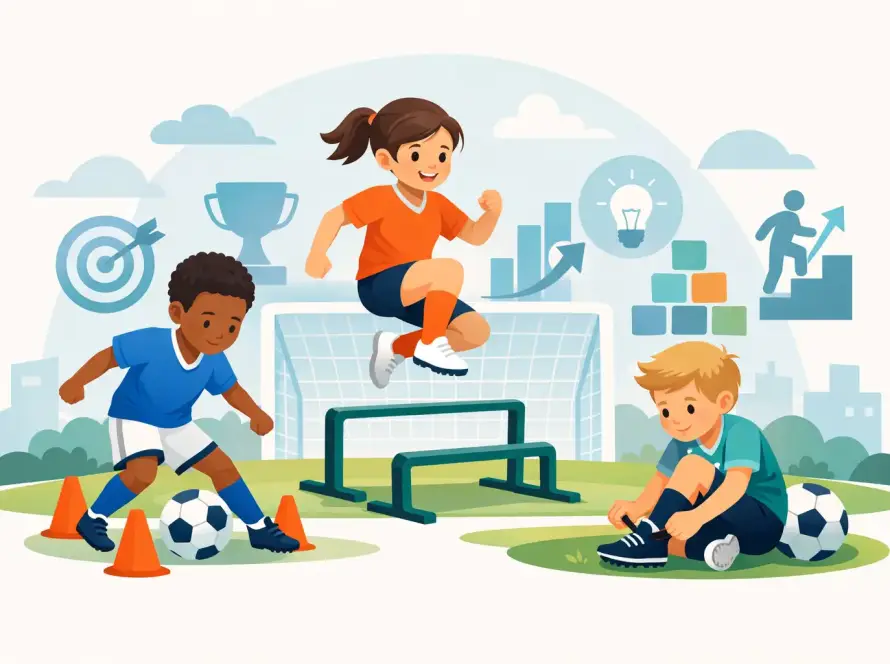
Soccer fundamentals matter. Dribbling, passing, receiving, shooting, defending, and movement all give players the tools to enjoy matches with greater confidence. Yet skill development is most effective when it happens through purposeful activities rather than long lines and repeated lectures.
Young players learn best when they have frequent touches on the ball and chances to make decisions. Small-sided games are especially valuable because they ask every player to stay engaged. There is less time to hide behind a more experienced teammate and more opportunity to recognize space, respond to pressure, and try again after a mistake.
Game awareness grows gradually. A newer player may first focus on keeping the ball close. With time, that same player begins to look up, recognize an open teammate, understand when to defend, and see how their movement can help the entire group. Those moments are worth celebrating because they show a child is becoming a soccer thinker, not just a participant.
Character development belongs in that process. Players should be expected to arrive prepared, listen when instruction is given, respect officials, and handle wins and losses with maturity. Those standards are not separate from athletic development. Discipline helps players improve. Integrity builds trust among teammates. Resilience keeps a young athlete moving forward after a missed shot, a lost match, or a tough practice.
The Right Challenge Depends on the Player
Parents sometimes wonder whether recreational soccer is challenging enough for their child. The honest answer is that it depends. A player who is brand new to the sport may need time to develop comfort, coordination, and confidence before moving into a more demanding setting. Another athlete may quickly need additional training or stronger match competition to continue growing.
The best decision is not always to move a child up as soon as possible. A player who receives limited playing time or feels overwhelmed can lose the joy that made them want to play. At the same time, a player who is never challenged may become bored and stop developing. Parents should look for a program that pays attention to the individual athlete rather than placing every child on the same timeline.
Ask practical questions when evaluating a program. How are coaches teaching technical skills? Are practices organized and active? Does the coach communicate clearly with families? Are children encouraged to compete without being shamed for mistakes? Is there a pathway for players who want more training or future competitive opportunities?
The answers reveal whether a program is built around real development or simply around filling a schedule.
A Positive Team Culture Changes the Experience
Children notice the emotional temperature of a team quickly. They know when adults are frustrated, when teammates are being left out, and when winning has become more important than learning. A positive culture does not mean avoiding accountability. It means holding players to standards while treating them with patience and respect.
Coaches set that tone. They can correct a player firmly without embarrassing them. They can teach athletes to compete hard while honoring opponents. They can make sure the quiet child is seen, the energetic child is guided, and the player struggling with confidence receives a reason to keep working.
Parents have an important role as well. The car ride home after a match can either strengthen a child’s love for soccer or turn every game into an evaluation. Instead of leading with questions about goals, minutes, or mistakes, parents can ask what their child enjoyed, what felt difficult, or what they want to practice next. That approach teaches young athletes that growth matters more than a single result.
A strong soccer community also welcomes families from different backgrounds and experiences. Shared standards of respect, service, and encouragement help create belonging. At Sentinels FC, that commitment is grounded in a faith-based mission that welcomes families of all religious backgrounds and cultures while helping players pursue growth with character and purpose.
Why Experienced Coaching Matters in Recreation
Recreational players deserve coaches who understand how to teach, not simply how to play. A former player may love the game, but effective coaching requires planning, communication, patience, and the ability to adjust instruction for different ages and ability levels.
Experienced coaches know that a six-year-old and a fourteen-year-old do not learn in the same way. Younger players need movement, repetition, simple language, and plenty of encouragement. Older athletes can begin to handle more tactical concepts, personal accountability, and deeper conversations about decision-making in the game.
Coaching experience also helps adults see the player behind the performance. Some athletes need to be challenged directly. Others need a calm word after making the same mistake several times. The goal is not to build dependence on praise. It is to help players develop internal confidence, the kind that lets them take instruction, work through adversity, and step onto the field ready to contribute.
More than 25 years of proven training experience can make a meaningful difference when it is paired with personal attention. Families should not have to choose between serious instruction and a caring environment. Young athletes need both.
Building Habits That Carry Into Everyday Life
Soccer gives children immediate feedback. A poor first touch can lead to a lost ball. A late run can leave a teammate without support. A well-timed pass can create an opportunity for someone else to succeed. These lessons help players see how preparation and choices affect the group.
Over a season, players can develop habits that serve them at home, in school, and in their communities. They learn to arrive on time, bring the right equipment, listen to direction, manage emotions, and follow through on responsibilities. When academic accountability is part of the culture, athletes also understand that being a committed player includes being a committed student.
Leadership begins here, too. It is not reserved for the loudest player or the one who scores the most goals. A young leader may help collect equipment, welcome a new teammate, keep working after a setback, or speak encouragement when the team is tired. Those actions build the kind of confidence that lasts beyond a soccer season.
Helping Your Child Get the Most From the Season
A successful recreational season does not require extra pressure at home. It requires consistency. Help your child arrive ready to train, with water, proper footwear, and a willingness to learn. Encourage regular practice, but protect space for rest, schoolwork, and family life.
Keep goals simple and personal. A player might work on using their weaker foot, communicating more during games, or responding positively after a mistake. Small goals give children a clear way to recognize progress, even when the final score does not go their way.
Most of all, remind your athlete that soccer is a place to compete, grow, and enjoy the process. When a child knows they are valued for their effort and character as much as their performance, they are more likely to take brave chances on the field and carry that confidence into every part of life.
2 Comments