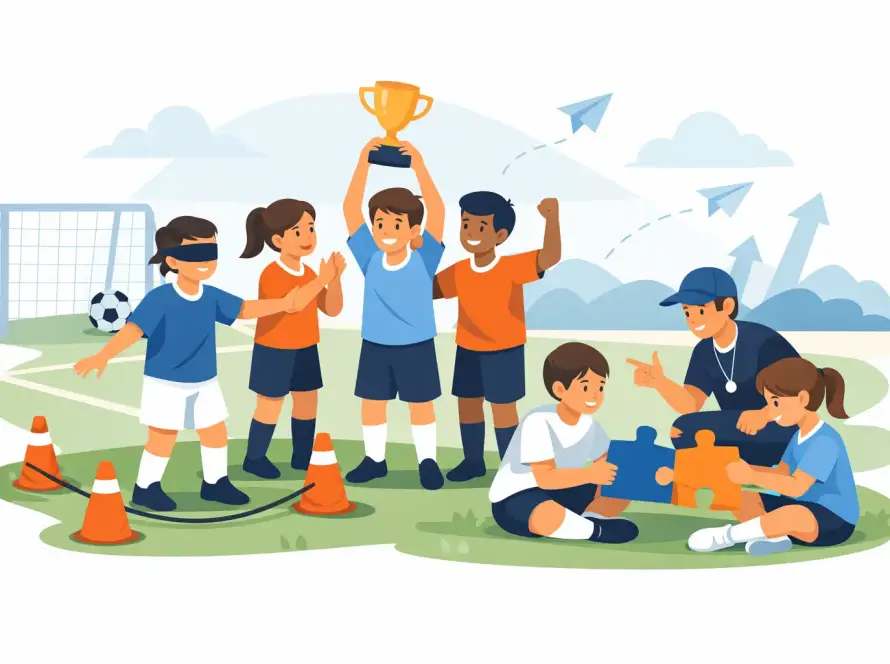
Saturday soccer can reveal much more than a scoreline. It shows whether a young player can respond after a missed pass, listen when coaching is difficult, encourage a teammate, and keep competing when the game gets physical. For families considering a Cal South soccer league pathway, those moments matter just as much as goals and wins.
For players in Fontana, Rancho Cucamonga, and throughout the Inland Empire, Cal South-affiliated competition can provide a meaningful next step beyond casual play. It gives athletes a structured environment to test their skills, learn the demands of team commitment, and grow through regular match experience. The right experience, however, depends on more than the league name. It depends on coaching, team culture, player readiness, and whether the program sees the whole child.
Cal South Is the Foundation, Not Just a Schedule
Many families use the phrase “Cal South soccer league” to describe competitive youth soccer in Southern California. Cal South is the governing association that supports sanctioned youth soccer programs, clubs, coaches, referees, and competition pathways across a large part of the region. League play may take place through affiliated leagues, including Coast Soccer League for many competitive teams.
That distinction is useful because a league provides the competition calendar, while a club shapes the daily player experience. A child may play strong opponents every weekend, but real development happens in training sessions, coach conversations, team standards, and the response to setbacks.
For parents, the question is not simply, “What league does this team play in?” A better question is, “What will my child learn in this environment every week?” The strongest programs connect competitive opportunities with purposeful training and clear expectations for effort, attitude, attendance, and respect.
What Players Gain From Structured Competition
Competitive soccer asks more of players than recreational soccer, and that challenge can be healthy when it is age-appropriate. Athletes begin to understand positions, game management, defensive responsibility, transition moments, and how individual decisions affect the entire team. They also learn that progress is rarely a straight line.
A player may be confident one week and struggle the next. They may earn fewer minutes than expected, face a faster opponent, or make a mistake that leads to a goal. With invested coaching and family support, these experiences become opportunities to build resilience rather than reasons to walk away.
Regular competition also gives coaches valuable information. Training can show technical ability, but games reveal decision-making under pressure. Can a player scan the field before receiving the ball? Can they recover after losing possession? Do they communicate when the team needs leadership? These are the details that help a coach create an individual development plan instead of offering the same instruction to every athlete.
For ambitious players, the competitive environment can prepare them for higher levels of play. For players who are still building confidence, it can give them a clear reason to practice fundamentals with focus. Both pathways have value. Not every young athlete needs the same pace or pressure at the same time.
Is Competitive League Play Right for Your Child?
A Cal South-affiliated team can be a strong fit for a player who enjoys learning, accepts coaching, and is ready for a more consistent commitment. That does not mean a child must already be the fastest, strongest, or most polished player on the field. Potential matters, but a willingness to work often matters more.
Parents should also consider practical factors. Competitive teams commonly involve regular training, weekend matches, travel within Southern California, team fees, uniforms, and occasional tournament opportunities. The exact commitment varies by club, age group, team level, and season. Asking direct questions early helps families make a decision they can sustain.
A child may be ready technically but need more time to develop confidence. Another may love competition but need support with organization, schoolwork, or emotional control after difficult games. A quality program does not ignore those needs. It helps players grow into the responsibility that competitive soccer requires.
Recreational soccer remains an excellent place for many children to learn the game, make friends, and enjoy physical activity. Competitive soccer is not automatically better. It is simply a different environment with greater structure and a different level of expectation. The best choice is the one that supports the player’s current stage of development and the family’s goals.
What Families Should Look for in a Cal South Soccer League Team
League affiliation can be part of a club’s credibility, but it should never be the only factor in a family’s decision. Watch a training session if possible. Notice whether coaches correct players with clarity and encouragement, whether athletes are active and engaged, and whether standards are consistent for everyone.
Ask how the club develops players across the season. A thoughtful answer should include more than winning games. Look for a plan that addresses ball mastery, passing and receiving, defending, movement, game awareness, fitness, and confidence. Young players need repetition, but they also need to understand why a skill matters in a real match.
Team culture deserves equal attention. Soccer can teach discipline, teamwork, integrity, and leadership when adults model those values. Players should be challenged without being shamed. Families should receive communication that is direct and respectful. Coaches should hold athletes accountable while helping them learn how to respond constructively.
It is also worth asking how a club handles playing time, roster decisions, and position development. There is no single answer that fits every age group or level of competition. Developmental teams may prioritize broad learning opportunities, while older and more competitive teams may make decisions based on performance, training habits, and tactical needs. What matters is honesty. Families deserve to understand expectations before they commit.
Development Beyond the Matchday Result
The best youth soccer experience does not end when the final whistle blows. Players carry the lessons of sport into school, family life, friendships, and future responsibilities. Showing up on time, completing schoolwork, respecting officials, and serving teammates are habits that shape character.
That is why mentorship matters. A coach can teach a first touch or defensive stance, but they can also help a player see adversity differently. A hard loss can become a lesson in preparation. A reduced role can become motivation to improve. A leadership opportunity can teach a quiet player to use their voice.
At Sentinels FC, the purpose is to develop athletes who compete with confidence and live with integrity. With more than 25 years of coaching experience behind its approach, the club combines player development, competitive match play, mentorship, and a faith-based foundation that welcomes families of all religious backgrounds and cultures. The goal is not to create soccer players who only perform when everything is going well. It is to help young people become disciplined, resilient teammates who are prepared for what comes next.
How Parents Can Support the Journey
Parents play a major role in helping young athletes get the most from competitive soccer. The car ride home is often where players decide whether a tough game becomes a burden or a learning moment. Instead of immediately reviewing mistakes, start with a simple question: “What did you learn today?” Let the player share their perspective before offering yours.
Support the team without making the outcome the only measure of success. Celebrate effort, coachability, courage, and improvement. Hold your child accountable for attendance, equipment, hydration, rest, and academic responsibilities. When parents, players, and coaches work from the same standards, athletes receive a message that is both encouraging and clear.
It also helps to give players room to own their experience. A parent can advocate when communication is needed, but young athletes should gradually learn to speak respectfully with coaches, ask questions, and take responsibility for their own preparation. Those are leadership skills that will serve them long after youth soccer.
The right Cal South pathway should give a player more than a uniform and a weekend schedule. It should give them a place to belong, a reason to work, and trusted adults who see the person behind the player. Choose an environment where your child can compete with purpose, grow through challenge, and carry strong character onto every field they enter.